Top Healthcare KPIs Every Healthcare Practice Should Track for Long-Term Success

Factors like reimbursement cycles, staffing shortages, and cyber threats are changing the way clinics define medical practice success.
For many small to mid-size practices, it's a matter of looking at their bottomline and patient volume. Others dive deeply into their key performance indicators (KPIs), and rightfully so. Six out of ten managers recognize that improving their KPIs, both in what and how healthcare performance metrics are measured, is critical for making smart decisions.
This survey data from over 3,000 respondents confirms a critical reality: Practices regularly refining their KPIs are better positioned to thrive in the competitive healthcare market.
Turn Metrics Into Momentum
Why KPIs Matter in Healthcare Practice Management
Key performance indicators in healthcare ensure that clinics gain visibility into aspects of clinical operations. Without these indicators, practices may set goals that are difficult to measure or don't align with their value-based care metrics.
The shift from volume-based to value-based care meant clinics must drive better patient outcomes while maximizing efficiency. By leveraging healthcare analytics and well-defined KPIs, practices can proactively detect early trends and prevent complications, as outlined in the table.
| Priority | Healthcare KPIs | Result |
|---|---|---|
| Quality of care | Treatment success rate, hospital readmission rate, and preventive care compliance | Improves patient outcomes; reduces avoidable complications |
| Patient engagement | Net promoter score, patient retention rate, and feedback response rate | Boosts patient satisfaction and long-term health management |
| Operational efficiency | Average patient wait time, no-show rate | Enhances patient experience; optimizes resource utilization |
| Financial health | Revenue per patient, clean claim rate, and denial rate in medical billing | Supports sustainable operations |
| Regulatory compliance | Quality reporting KPIs (e.g., HEDIS, MIPS measures) | Ensures eligibility for incentives; avoids penalties |
Top Financial KPIs for Medical Practices
Strong financial health keeps a medical practice thriving, and the right KPIs help you stay on track. Here are four revenue cycle KPIs every clinic should monitor:
Revenue per Patient
See how much revenue each patient visit generates. This indicator helps spot opportunities to improve billing processes and overall profitability.
Clean Claim Rate
A higher rate means fewer billing errors and faster reimbursements, keeping your cash flow uninterrupted.
Net Days in Accounts Receivable
This metric indicates how long it takes for medical services to get paid. Shorter collection times mean stronger financial stability.
Denial Rate
A high denial rate in medical billing points to deeper coding, billing, or documentation issues. Tracking these financial indicators helps you spot problems early and predict future revenue with confidence.
Manage KPIs Smarter with IMS Practice Analytics
With Meditab’s IMS Practice Analytics, monitoring these financial KPIs for medical practices becomes simple and powerful. Your clinic gets:
- Customizable dashboards tailored to your needs
- Easy-to-generate reports for financial, operational, clinical, and engagement data
- Real-time insights to guide better decision-making
“IMS is very modern—sophisticated—it works seamlessly, and it's enabled us to probably cut our billing time in half.” Marilyn Benck, Table Mountain Rancheria Medical Center
Operational KPIs That Boost Efficiency
Smooth, efficient operations create better patient experiences and a healthier bottom line. Keeping tabs on the right operational KPIs can reveal where your practice can streamline and improve. Essential metrics to monitor include:
Average Patient Wait Time
Shorter wait times improve patient satisfaction and reduce appointment bottlenecks.
Appointment Scheduling Efficiency
It measures how well your practice fills appointment slots, helping maximize clinician productivity.
No-Show Rate
It gauges the percentage of missed appointments, helping you spot scheduling issues and improve follow-up strategies.
Don’t just guess where the gaps are! See your staff productivity metrics clearly and fix them fast. Request a demo today and find out how IMS can streamline your operations and elevate your patient experience.
Provider Productivity
Tracks how many patient encounters each provider completes within a timeframe. Higher productivity indicates optimized schedules, increased revenue, and better resource allocation.
Inventory
Stay ahead of supply shortages or costly overstocking. Monitoring medical supplies, medications, and equipment helps ensure continuity of care, reduces waste, and maintains cost control.
Clinical KPIs for Quality of Care
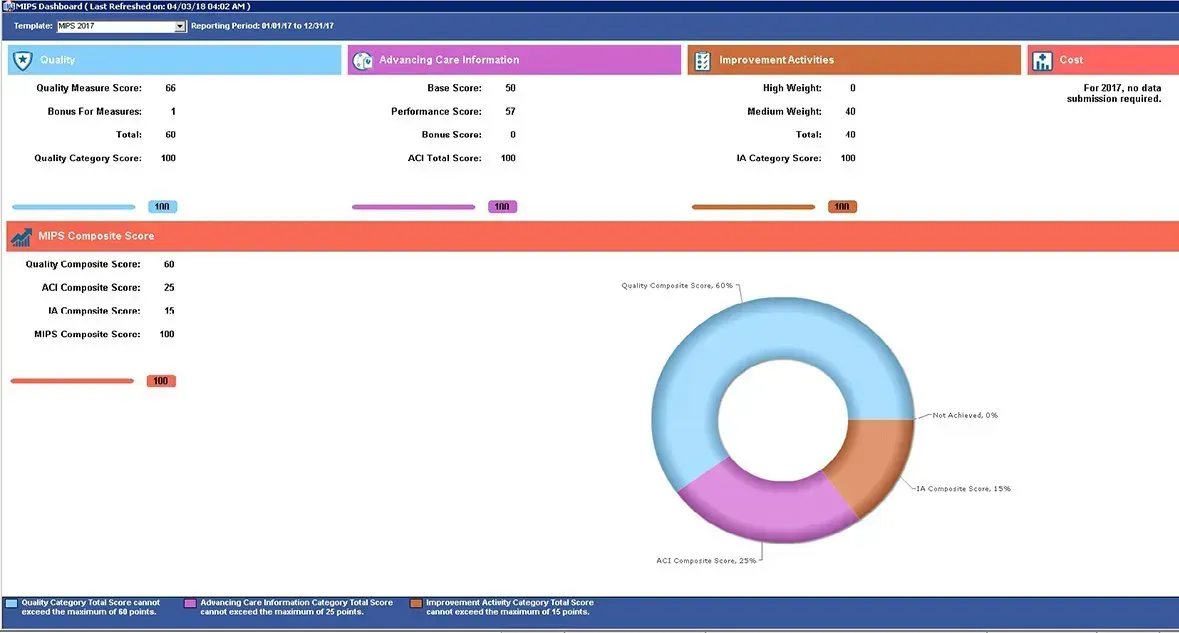
Exceptional patient care involves tracking outcomes and making continuous improvements. This facet allows your team to measure care effectiveness while reducing risks. To achieve this, focus on these clinical performance indicators:
Hospital Readmission Rate
A high rate often signals gaps in post-care follow-up or care quality, so keeping it low is critical in value-based care.
Preventive Care Compliance
This metric covers how consistently patients receive recommended screenings, vaccines, and chronic care management.
Don’t let quality gaps or missed benchmarks hold your practice back. Keep your practice aligned with built-in tools to simplify MIPS compliance and reporting. Call 1-844-463-3482 to see how IMS can help you deliver better care and meet your healthcare quality metrics — all in one place.
Patient Satisfaction and Engagement KPIs
Tracking how engaged your patients are helps drive loyalty and protect your reputation. Keep an eye on these patient satisfaction metrics:
New Patient Rate
Tracks the number of first-time patients, reflecting your practice’s growth, visibility, and reputation.
Net Promoter Score (NPS)
It measures how likely patients are to recommend your practice, which provides a powerful pulse check on satisfaction and trust.
Patient Retention Rate
It shows how well your practice keeps patients returning, a key signal of care continuity.
Feedback Response Rate
This rate captures how many patients respond to surveys. The higher the rate, the better your insights into their experience.
Collecting quality feedback shouldn't be complicated. With IMS, your clinic can deploy mobile-friendly forms patients can fill out in seconds.
Monitoring and Analyzing KPIs Using Smart Analytics
Tracking your clinic’s performance indicators shouldn’t be a guessing game. With intuitive tools for healthcare data analytics, you can lead your practice confidently with data insights.
Designed to simplify tracking across clinical, operational, financial, and engagement KPIs, IMS Practice Analytics delivers:
- EHR-integrated KPI dashboards for real-time data visibility.
- Custom, auto-generated reports for tracking trends and setting goals.
- Automated alerts and insights to flag underperformance early.
Why do tools for healthcare data analytics matter? According to MIT Sloan’s research with BCG, smart KPIs don’t just highlight hidden opportunities — they help practices avoid the risks of relying on outdated or static performance measures.
Legacy KPIs can become blind spots if teams neglect to reexamine them or leverage the right healthcare KPI tracking software. IMS makes it easy to replace those blind spots with forward-looking insights, helping practices stay agile and data-informed.
“IMS really provided us a whole different level of excellence with all of the programs that we really needed to improve our practice.”
-Debbie Regan, Audubon Fertility
Power Long-Term Success with IMS Practice Analytics
While many clinics still judge their progress by patient volume or monthly revenue, more forward-thinking practices are turning to healthcare KPIs to guide strategic decisions. These metrics give practices clarity to make data-driven decisions, boost efficiency, and elevate patient outcomes.
From financial health to operational flow, tracking the top healthcare performance metrics ensures your practice stays agile, compliant, and competitive. With IMS Practice Analytics, you don’t just collect KPIs—you transform them into actionable momentum that drives your practice forward.
Frequently Asked Questions (FAQs)
What do KPIs mean in a healthcare setting?
KPIs or healthcare performance indicators are measurable values that track a medical practice’s finances, operations, clinical care, and patient engagement performance.
How can tracking KPIs lead to better care outcomes?
Monitoring clinical KPIs helps practices identify care gaps early and make data-driven improvements that boost treatment effectiveness (e.g., using readmission rates to identify patients who need follow-up care).
How often should a practice review its KPIs?
Practices should review KPIs monthly or quarterly to catch trends early, adjust strategies, and stay aligned with changing goals or compliance requirements.
What are the most critical KPIs for smaller healthcare providers?
When looking at the best KPIs to track in medical practices, small or independent practices should focus on core KPIs like revenue per patient, denial rate, appointment efficiency, and patient retention to balance growth and quality care.
Share this post: