Data Migration in Healthcare: A Complete Guide
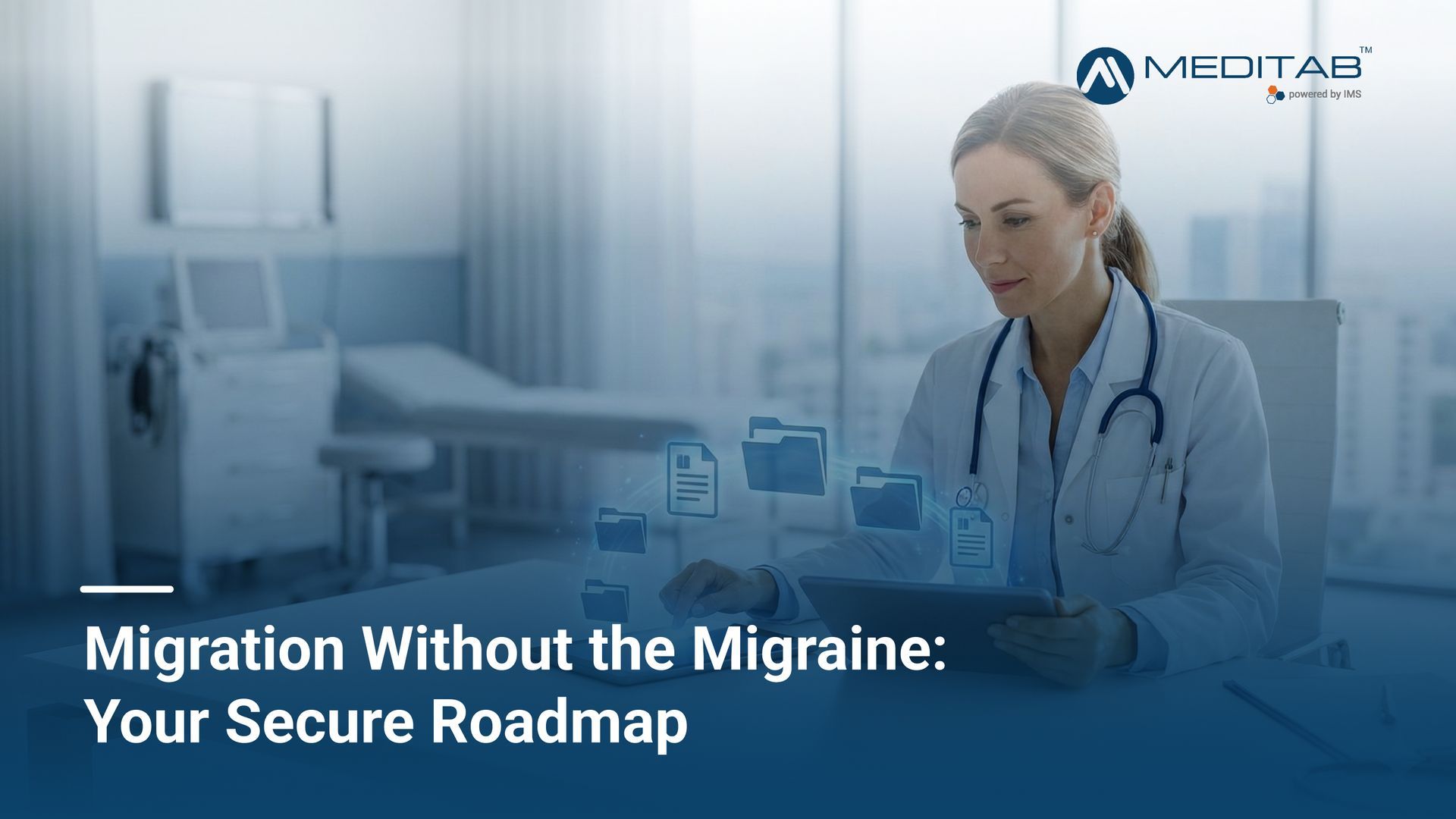
The Comprehensive Guide to Data Migration for Modern Practices
Switching to a new EHR software is a significant milestone for any medical practice. While a new interface and updated features are exciting, the success of the transition depends heavily on how you handle and migrate your existing information. A recent study found that healthcare organizations that invest adequate time in planning reduce their migration timeline by up to 30% and decrease the risk of data loss by 40%.
Data migration is more than just a technical necessity; it is a critical bridge to maintaining continuity of care. When handled correctly, it ensures that your team has the correct information at the right time. When ignored or rushed, it can lead to fragmented records and administrative headaches.
This guide explores how to navigate the complexities of moving your healthcare data safely and efficiently while maintaining the highest standards of accuracy. When accuracy, compliance, and continuity matter most, choosing the right migration partner becomes critical.
Make Your Data Migration Effortless
What is Data Migration in Healthcare?
At its most basic level, data migration is the process of selecting, preparing, extracting, and transferring data from one computer storage system to another. In a medical context, this usually occurs when a practice upgrades its legacy software to a modern EHR or migrates its local servers to a cloud-based data model.
It involves moving diverse datasets, including:
- Demographics and insurance information
- Clinical charts, notes, and histories
- Lab results and imaging reports
- Billing records, coding data, and financial history
Because of the sensitivity of this information, the data migration process must be handled with extreme precision to ensure that no records are lost or corrupted during the move.
Why Healthcare Data Migration Matters
A successful data migration strategy is the foundation of high-quality clinical data management. Without a clean transfer, your new system is essentially an empty shell.
Proper migration supports:
- Continuity of Care: Doctors need immediate access to past medical history to make informed decisions.
- Operational Efficiency: Automated transfers eliminate the need for staff to re-enter thousands of patient files manually.
- Regulatory Compliance: Maintaining accurate, accessible records is a legal requirement under HIPAA and other healthcare regulations.
- Advanced Insights: Clean data allows you to leverage healthcare data analytics to track patient outcomes and practice performance more effectively.
Key Challenges in Healthcare Data Migration
Moving medical records is rarely a "plug-and-play" experience. Several hurdles can complicate the process:
- Data Integrity and Quality: Older systems often contain duplicate entries or inconsistent formatting. If you migrate "dirty" data, you simply bring old problems into a new system.
- Security Risks: Data is most vulnerable during transit. Protecting it from breaches during the move is a top priority.
- System Downtime: Practices must balance the migration timeline with daily operations to ensure patient care isn't interrupted.
- Data Silos: Information is often scattered across different departments or third-party vendors, making data integration a complex puzzle.
The Meditab Advantage
For many practices, the biggest barrier to upgrading technology is the fear of a long, drawn-out transition. It is common in the industry for data migration services to take four to five months to complete, leaving staff in limbo.
Meditab changes that timeline. While external factors such as payer enrollments and clearinghouse approvals can influence the final go-live date, Meditab completes your system setup, data migration, and training in just a few weeks, not months, so your team is implementation-ready far sooner than industry norms.
This accelerated approach minimizes disruption, reduces administrative stress, and allows your providers to start benefiting from our clinical data management tools almost immediately.
Step-by-Step Data Migration Roadmap
To ensure success, follow a structured data migration process. A well-planned roadmap minimizes risks and keeps your team on track.
1. Planning and Discovery
Start by auditing your current data. Decide what needs to come with you and what can be archived. Not every piece of information from twenty years ago needs to be active in your new EHR.
2. Data Mapping and Cleaning
This is where you determine how data from the old system will fit into the new one. Use this time to standardize formats and remove duplicates. This step is a cornerstone of data migration best practices.
3. Execution and Extraction
Using specialized data-migration software, the technical team begins pulling data from the source system. It is often best to perform this in stages to catch errors early.
4. Testing and Validation
Before going fully live, run a pilot migration. Review a sample of patient records to ensure that every lab result and note is in the correct field.
5. Final Cutover and Go-Live
Once validation is complete, the final transfer happens. This usually occurs over a weekend or after hours to minimize the impact on patient visits.
Future of Data Migration in Healthcare
The industry is moving toward more fluid, real-time data integration. We are seeing a shift away from one-time bulk transfers toward continuous synchronization. As more practices adopt AI, healthcare data analytics will likely help automatically clean and categorize data during the migration.
Furthermore, the rise of
FHIR (Fast Healthcare Interoperability Resources) standards is making it easier for different data migration services to speak the same language, reducing the friction of moving between platforms.
Conclusion
Navigating healthcare data transitions requires a blend of technical expertise and strategic planning. By following established data migration best practices, your practice can avoid common pitfalls such as data loss and system errors. Remember, the goal isn't just to move files from point A to point B; it is to create a more efficient, data-driven environment for both your staff and your patients.
With the correct data migration strategy and a partner who understands the nuances of clinical data management, you can ensure your information remains your practice’s greatest asset.
Meditab’s Cloud-based EHR: IMS
Frequently Asked Questions
How long does the data migration process usually take?
The timeline varies based on the volume of records and the complexity of the systems. A typical migration can take anywhere from a few weeks to several months.
Can we migrate data from any legacy system?
Most modern data migration software can handle a wide variety of formats, but the ease of the move depends on how "open" the legacy system's database structure is.
Will our practice experience downtime during the migration?
Most of the work happens in the background. The final "cutover" is usually scheduled during off-hours to ensure your practice remains operational.
Is cloud data migration safer than staying on-premises?
Modern cloud data migration provides strong encryption and redundancy that often exceeds what a typical small practice can maintain on an in-house server.
Share this post: