Transforming Healthcare with AI: How Meditab’s EHR Features Benefit Providers
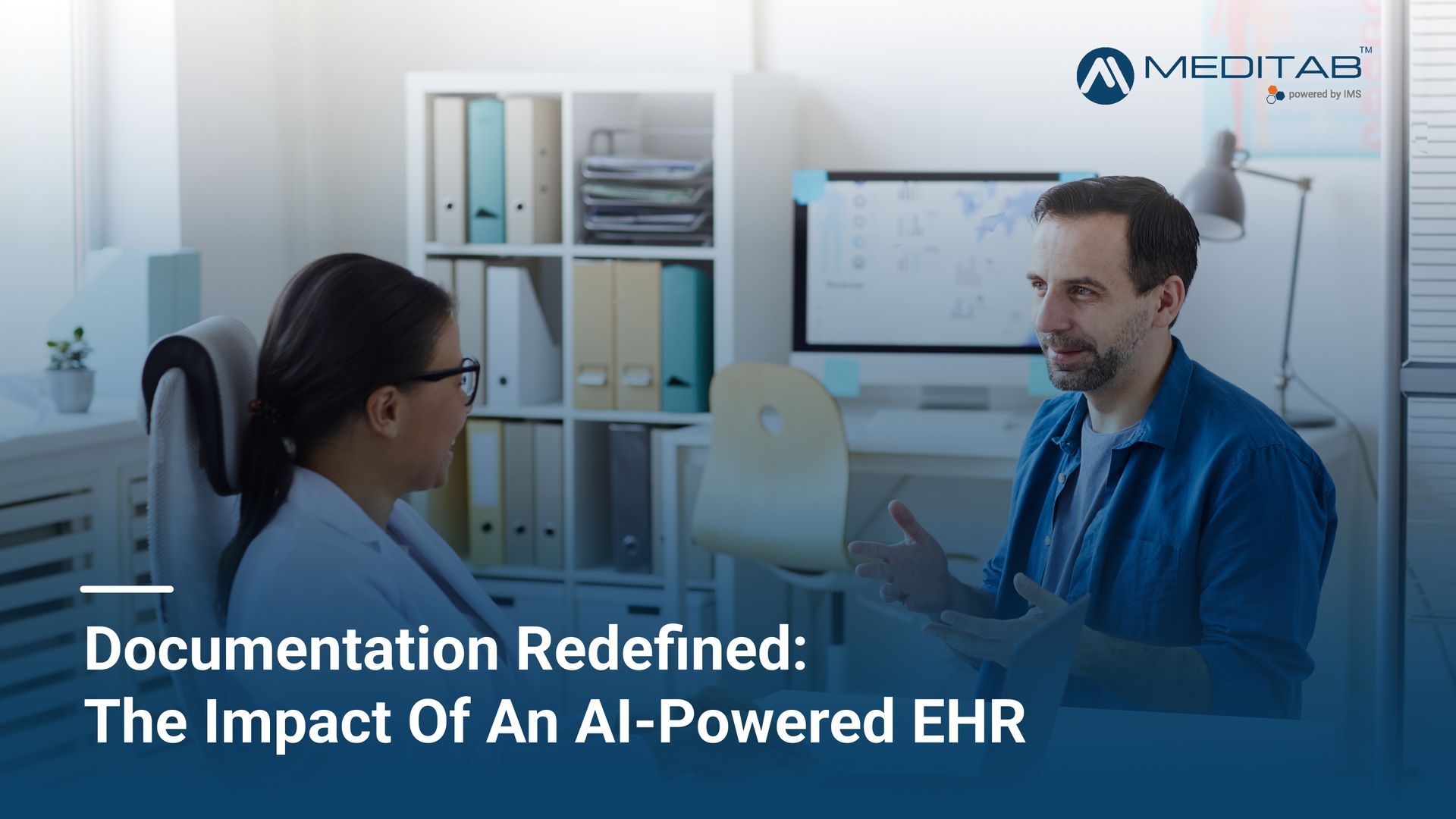
The medical technology field is constantly changing. For a long time, electronic health records have been viewed as digital filing cabinets, merely a place to store data and tick the compliance box. Today, the role of AI in healthcare has changed this, and electronic health records now act as intelligent assistants that play an active role in the medical field.
As providers face increasing pressure to see more patients while maintaining high standards of care, the need for smarter tools has never been greater. Meditab is leading this evolution by integrating AI healthcare technology directly into its flagship EHR, IMS, helping practices move beyond manual data entry and toward a more intuitive, automated future.
Smarter Clinical Workflows in Action
Why AI Matters in EHR Softwares
Traditional EHR platforms are often cited as a primary cause of provider burnout. The constant demand for manual documentation, the struggle with data overload, and the repetitive administrative tasks can pull a clinician's focus away from the patient.
This is where AI in EHR systems makes a tangible difference. By focusing on efficiency and accuracy, AI solves many of these pain points. It isn't just about adding new features; it is about reimagining the vision of medical software. Through Meditab’s IMS, AI acts as a layer of intelligence that anticipates needs, reduces clicks, and automates the "boring" parts of medicine so that doctors can focus on what they do best: healing.
Live AI Features in IMS and Their Benefits
Meditab has already deployed several tools that utilize artificial intelligence in medical practice to streamline daily operations.
IMSGo AI Transcription
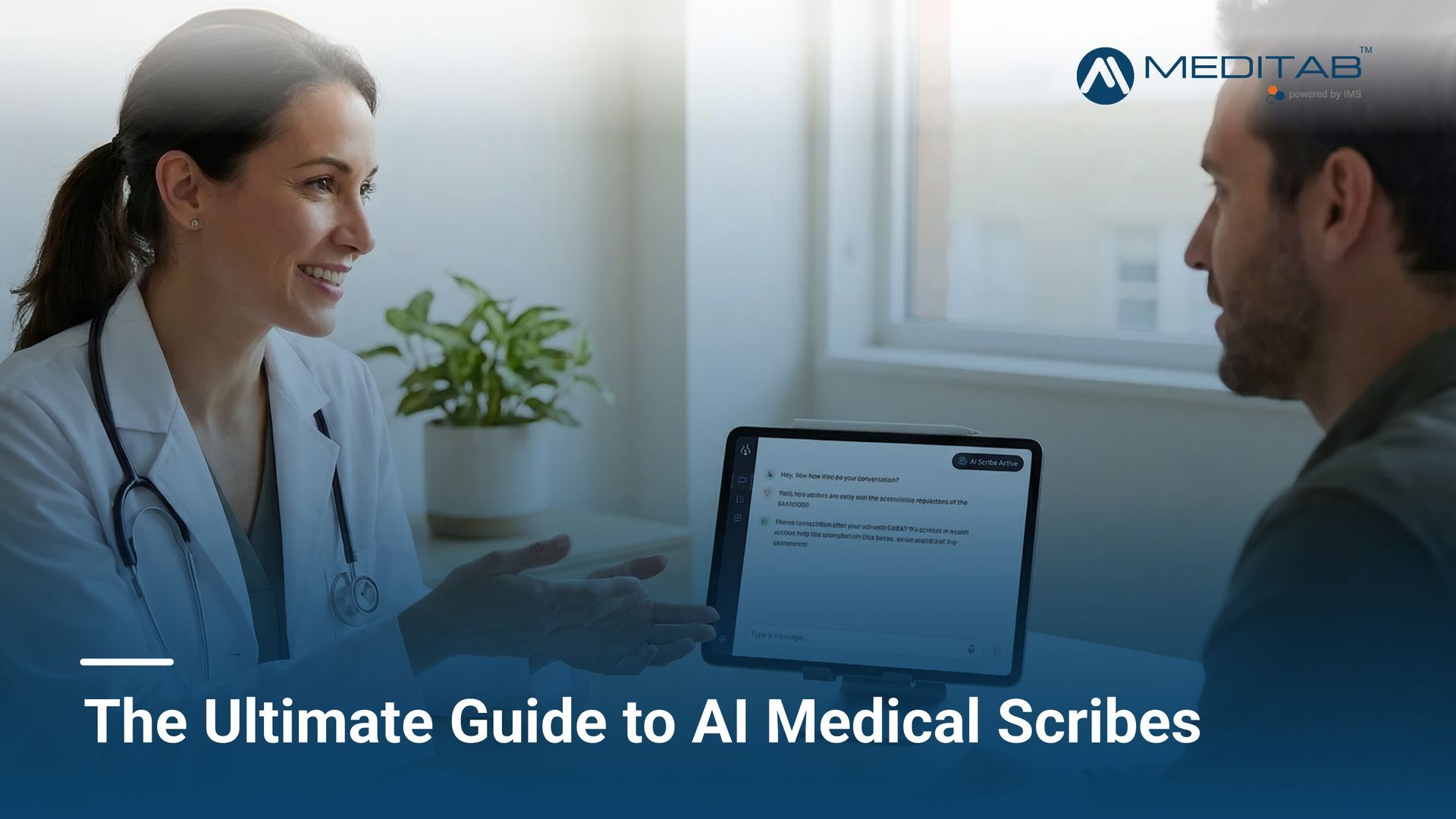
One of the most significant hurdles in any clinic is documentation. AI transcription for doctors through the IMSGo mobile EHR app allows providers to record patient encounters and have them converted into structured, accurate clinical notes automatically. This
AI-driven medical documentation saves hours of manual typing and allows the provider to maintain eye contact with the patient rather than looking at a screen.
AI No-Show Predictor
One of the biggest contributors to lost revenue is empty appointment slots. Our
AI no-show predictor tool looks at past visit history and patient behavior to determine which patients are more likely to not show up for their appointment. This offers a form of predictive analytics in EHR that helps optimize the practice’s scheduling.
Intelligent Workflow Automation
There are many mundane and repetitive activities involved in managing a practice. Intelligent workflow automation tools of Meditab EHR help automate routine tasks such as scheduling follow-ups and triggering documentation prompts. Healthcare automation tools help streamline operations and ensure that nothing slips through the cracks. This helps improve staff productivity.
When your entire workflow is in sync, right down to the minute, the benefits are bound to be reflected. We make sure that happens effortlessly.
AI-Driven ICD-10 Coding Assistance
An advanced system that automatically suggests or enters
ICD-10 codes based on the conversation between the patient and the doctor. The transcription system plays an important role in accurately transcribing the dialogue between the patient and the doctor, thereby enhancing the doctor's decision-making process.
The Future of AI in IMS’s Ecosystem
The innovation at Meditab doesn't stop with current features. Our R&D teams are currently working on the next generation of AI for healthcare providers, with a focus on deeper integration into the clinical journey.
1. Advancing Data Interoperability and AI-Driven Insights
True data interoperability in healthcare is one of the greatest challenges to coordinated care. We are doubling down on standards-based exchange, Health Information Exchange (HIE) connectivity, and advancing our artificial intelligence, which interprets disparate data into actionable and predictive information. This will allow clinics to move from a reactive approach to healthcare to a preventative approach.
2. Inpatient Insights
This tool will provide healthcare predictive tools by analyzing recent patient data and highlighting the most important updates, giving clinicians a concise summary of a patient's status before they even enter the room.
3. Predictive Claim Editing
This tool will automatically flag missing modifiers, mismatched codes, and payer-specific issues in real time - resulting in cleaner claims, fewer denials, and quicker payments.
Real-World Impact: Smarter Care, Better Results
When a clinic decides to implement an AI-powered EHR, the effects are felt almost instantaneously. There is a reduction in administrative burden and an increase in patient engagement because more time can be spent delivering premium service. With the implementation of AI claim scrubbing, denials have decreased, and reimbursement times have improved. This is not about the technology; it is about the sustainability of the healthcare environment.
Conclusion: Smarter Care with Meditab’s AI Advantage
AI is not here to replace the physician; it is here to empower them. By serving as a reliable partner in the exam room and the back office, Meditab’s AI healthcare technology helps ensure your practice remains efficient and patient-focused. As we develop more healthcare predictive tools, the gap between data entry and meaningful care will continue to shrink.
Experience the Power of Meditab’s AI
Frequently Asked Questions
How is AI transforming healthcare today?
AI is shifting the industry from reactive data storage to proactive care. It automates documentation, predicts patient behavior, and assists in clinical decision-making to improve outcomes.
What makes AI integration in EHR systems so important?
It directly addresses provider burnout by reducing administrative burdens and manual data entry, allowing for more focus on patient care.
How does AI improve workflow efficiency in Meditab’s EHR?
Through intelligent workflow automation, the system handles repetitive tasks like scheduling and follow-ups, freeing up staff for more complex duties.
How secure is patient data in AI-powered EHR systems?
Security is a top priority. Meditab ensures all AI features comply with HIPAA standards, using encryption and secure data processing to protect patient information.
Share this post: